SCA Systems

AI Integration

AI systems connected to the way your business actually works.

We integrate AI into existing tools, workflows, permissions, and operational routines. The goal is not another assistant. The goal is controlled AI infrastructure that can help teams move work, make decisions, and reduce repetitive handling.

Deployment paths

Go live with SCA, or run the integration inside your own boundary.

Start with a managed runtime when speed matters, then move proven workflows into a client-owned environment when governance, data access, or infrastructure policy needs it.

SCA Managed

Managed integration runtime

The fastest route when a team wants AI connected into real workflows without taking on platform operations from day one.

  • Hosted operating layer. SCA configures the runtime, tool access, evaluations, and review loops around the first workflow.

  • Faster path to proof. Your team sees the workflow moving inside familiar systems before expanding the integration boundary.

  • Governance included. Permissions, approvals, logs, and handoff rules are designed into the deployment from the start.

  • Room to migrate. The runtime is documented so successful workflows can later move closer to your own infrastructure.
Start managed

Client Owned

Private client deployment

For teams that need stronger ownership of data access, local services, credentials, and operational audit trails.

  • Your systems, your boundary. MCP servers, APIs, databases, files, queues, and internal tools stay inside the access model you approve.

  • Repeatable environments. Dockerized services keep workers, tools, and supporting runtimes easier to test, ship, and recover.

  • Human approval where needed. AI can prepare actions while sensitive writes, customer contact, or financial steps wait for confirmation.

  • Inspectable history. Every meaningful action can be logged with inputs, outputs, tool calls, and reviewer context.

Plan deployment

Integration flow

The build arrives as connected product moments.

Each stage should look and feel like part of the same operating system: intake, agent work, system updates, and review.

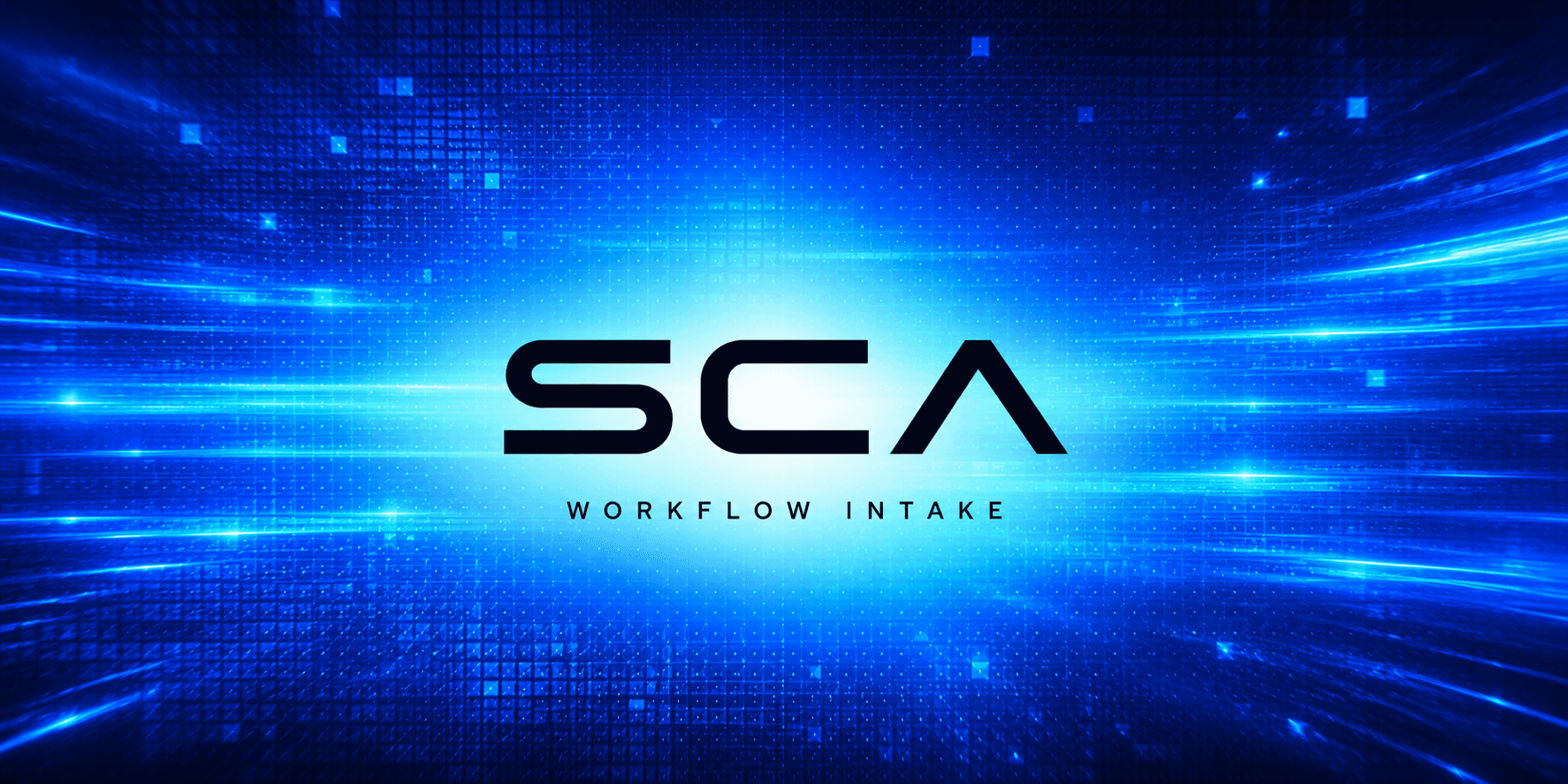
SCA intake release graphic with cyan signal bands

Workflow Intake

Emails, forms, files, and internal requests enter one controlled queue before AI touches the work.

Phase 01

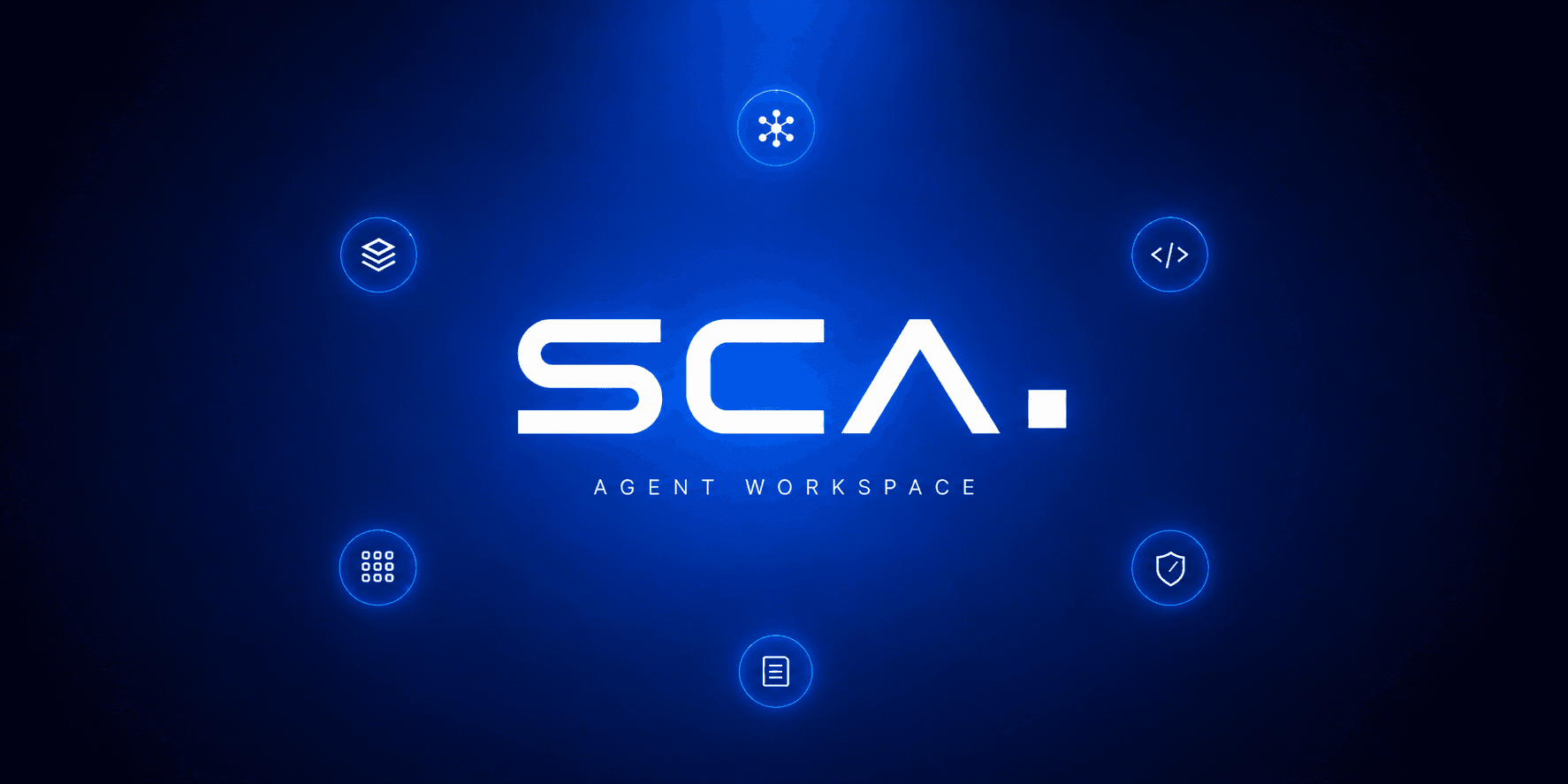
SCA agent workspace release graphic with orbiting runtime rings

Agent Workspace

Role-specific agents receive context, tools, limits, and evaluation checks for a defined business job.

Phase 02

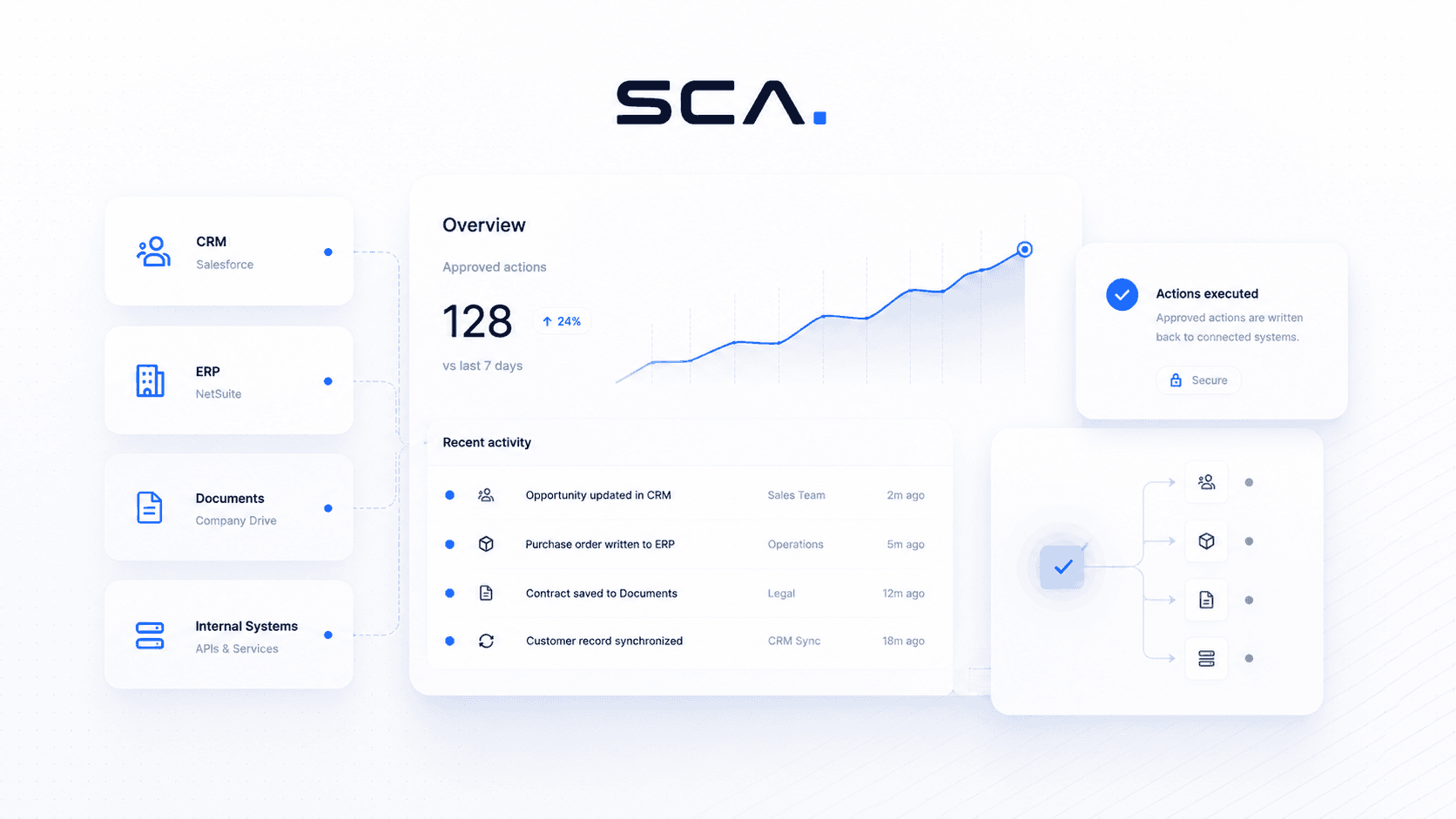
SCA writeback release graphic with dashboard panels

System Writeback

Approved actions update CRM, ERP, documents, tickets, or dashboards without leaving the process behind.

Phase 03

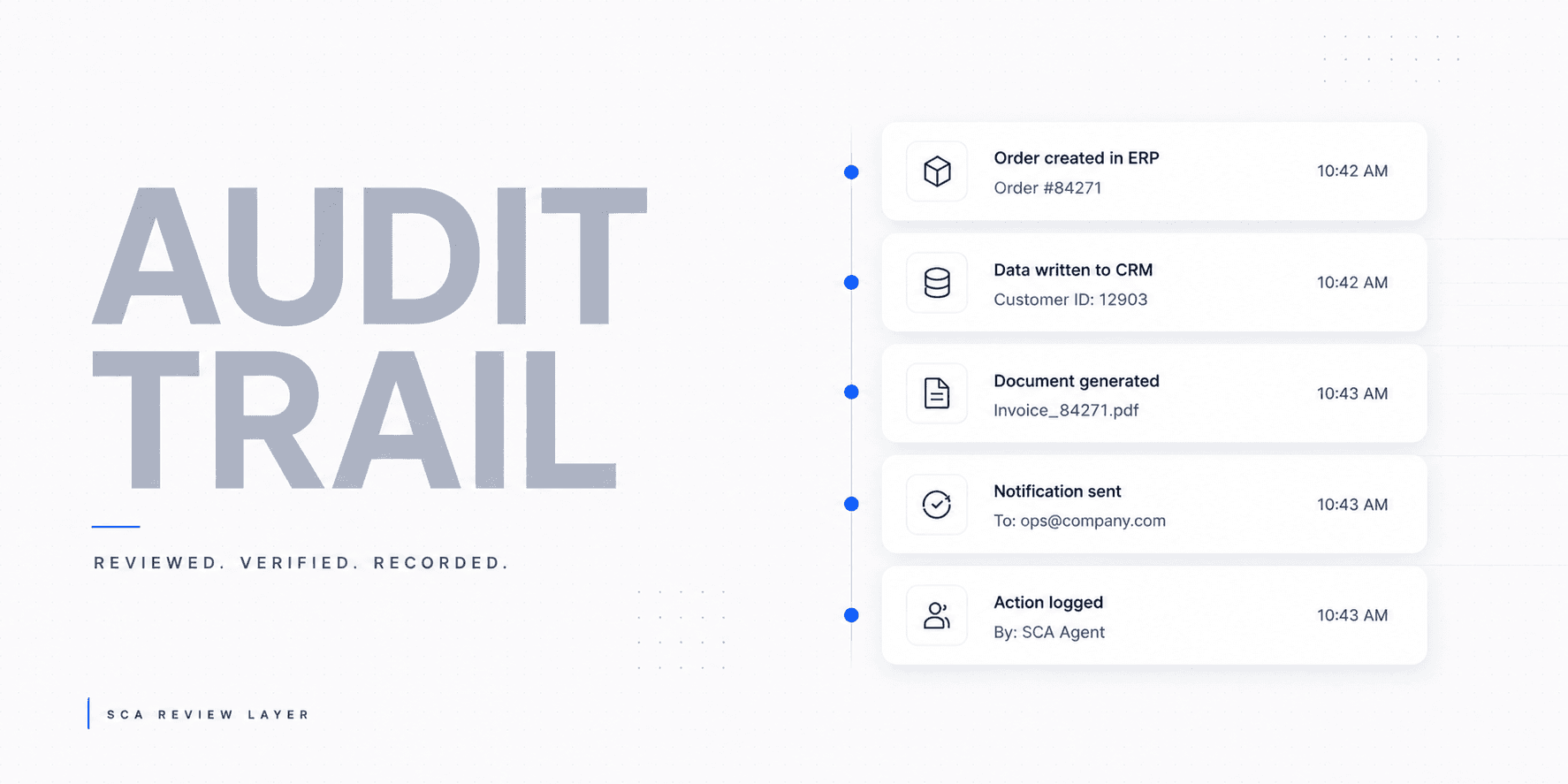
SCA review trail release graphic with audit blocks

Review Trail

Logs, reviewer notes, exceptions, and performance signals make the integration easier to trust and improve.

Phase 04

Technical spine

A controlled layer between AI and business systems.

Tool access layer

MCP

Structured access to approved tools, files, databases, APIs, and internal services.

Scoped execution

Agents

Role-specific agents for triage, research, reporting, operations, and support.

Process orchestration

Workflows

Triggers, queues, approvals, and handoffs mapped to how the business already works.

Governed rollout

Controls

Evaluation, permissions, audit logs, and deployment boundaries before scope expands.

Start with one workflow, then expand what proves useful.

We identify the first process worth integrating, define the controls, connect the systems, and measure whether the AI is useful before expanding scope.